
Robotics explained
What Is a Humanoid Robot? Uses and Deployment
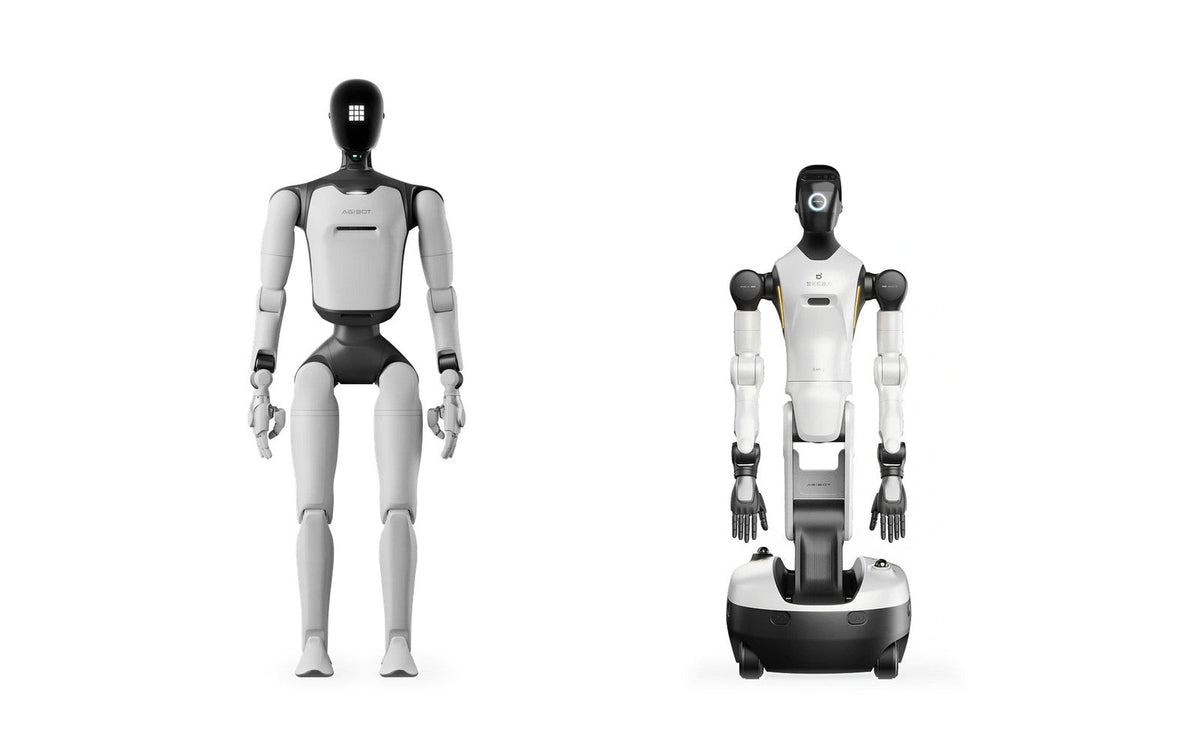
A humanoid robot is a robot whose body or physical features resemble those of a person. The term describes its form; it does not, by itself, tell you which tasks the robot can perform or how independently it can operate.
For businesses and research teams, the useful question is how a particular robot’s movement, sensing, software and tools fit an intended application.
Form and capability are different
Many humanoid robots have a head, torso, two arms and two legs. Other designs combine a human-like upper body with a wheeled base. Their reach, mobility and interaction methods can differ substantially.
Human-like appearance does not establish conversational ability, object-handling performance or autonomy. Those depend on the selected hardware, software and configuration. A robot designed for programmed performances should not be assumed to have the same capabilities as a platform configured for guided tours or manipulation research.
Where humanoid robots can be useful
Service and visitor interaction
Reception, information delivery and guided experiences combine movement with communication. Planning these applications involves the route, approved content, required languages and the way staff will support the service. AGIBOT’s A2 Ultra product information provides one example of a platform with interaction and navigation features.
Performances and events
Programmed movements and coordinated routines can form part of entertainment, exhibitions and brand events. Product selection depends on the routine, venue and control workflow. The site’s humanoid robot collection includes products with different performance and interaction roles.
Handling and manipulation
Some embodied robot platforms combine mobile bases, arms and hands or grippers for object-handling tasks. AGIBOT’s G2 materials list applications such as logistics sorting and precision operations. Each task still requires the right end effector, object characteristics, workspace and control method; the application label alone does not define a ready-to-run solution.
Research and development
A research project may focus on motion, perception, interaction or robot learning. Development access matters as much as the robot’s physical design. Check the interfaces, sensor access and supported software for the specific configuration.
How much can a robot do on its own?
Operation may involve a programmed sequence, remote control, autonomous functions or a combination of these. Ask how the demonstrated task was controlled and which parts require an operator, preparation or external systems.
A successful demonstration shows performance under particular conditions. It does not establish that the same robot will carry out an unfamiliar task at a different site without configuration or development.
What deployment involves
Practical deployment brings the robot, task and site together. It can include mapping, content preparation, software integration, testing and operator training. Charging arrangements, maintenance and staff intervention also need to fit the operating schedule.
Begin with one clearly defined workflow and agree on how success will be assessed. Then review the product and project scope against those requirements. For the financial side, our humanoid robot budget guide explains the costs to consider beyond the robot itself.
If you have a task in mind, share your application with our team. Include the operating environment, expected result, budget and timeline to support a focused discussion.
Discuss your application.
Share your use case, requirements and budget.
Contact sales