
Application guide
Human-Robot Interaction: Designing a Service Experience
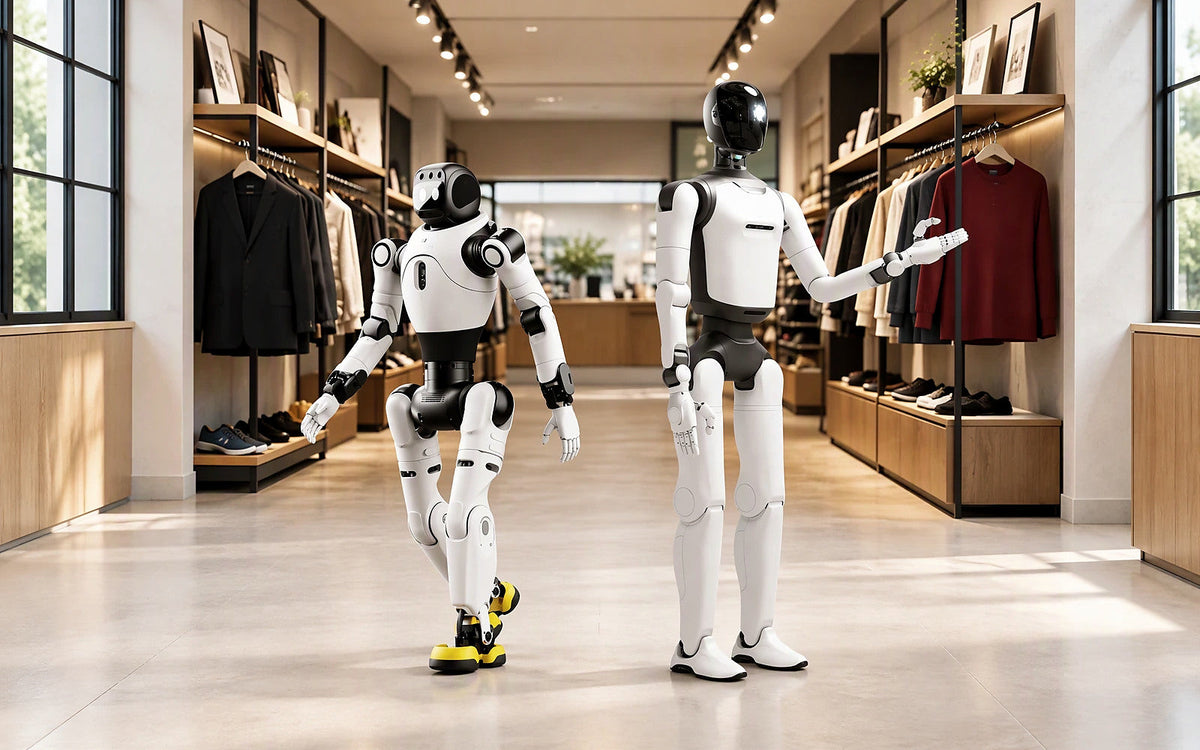
Concept illustration: a robot-assisted retail experience.
Human-robot interaction is about how people communicate and work with robots. In a service setting, a useful interaction helps a visitor complete a task: find a location, understand a product or follow a tour.
A clear script, accurate information and an understandable next step give the service a practical purpose. Here is how to plan an interaction that fits your customers and venue.
Define the visitor’s goal
Start with a specific situation. At a showroom, visitors might want an introduction to a product before speaking with a specialist. At an exhibition, they may need directions or an explanation at a display.
Write down where the interaction starts, what information the visitor needs and how it should end. This makes it easier to choose the appropriate robot and decide which content and integrations are required.
Build the conversation around approved information
List the questions visitors are likely to ask. Prepare short, accurate answers and define who maintains them. Product availability, opening hours and event details can change; the information workflow should account for those changes.
For example, AGIBOT A2 Ultra lists a configurable Q&A knowledge base among its interaction features. That gives a project a way to organize approved content, but the knowledge base still needs preparation and testing.
Specify the languages and specialist vocabulary required. Confirm support for the selected configuration and test with representative speakers. A language option alone does not establish how well a particular conversation will work in a busy venue.
Coordinate speech, movement and the setting
AGIBOT’s official guidance solutions describe workflows that combine reception, explanations, Q&A and navigation. These elements should be designed as one service experience.
In a planned showroom tour, for example, the robot might present information at agreed stops while staff remain available for detailed questions. The route, stopping positions, explanation length and visitor flow all need to be considered. The example illustrates a workflow to plan with the team; available functions depend on the selected configuration.
Test background noise, speaking distance, interruptions and the movement of people around the robot. Clear prompts should help visitors understand when to speak, where to stand and what they can ask.
Make the next step clear
Decide what should happen when a question is outside the approved content or needs a staff member. The experience could direct the visitor to a service desk or provide another agreed contact route. Confirm how that step will be implemented.
Present the robot’s role accurately. Keep staff responsible for questions and decisions outside the agreed service scope.
Test a small set of realistic conversations
Before launch, run through questions and situations that staff encounter in practice:
- A common question with an approved answer.
- An unfamiliar question that requires staff assistance.
- An interruption or a request to repeat information.
- A tour stop with nearby noise or changing foot traffic.
Agree on observable outcomes, such as accurate information, a completed explanation and a clear next step. Use the results to refine the content and operating arrangements.
To plan a service interaction, contact our team with the venue, visitor tasks, languages, budget and intended launch date. A sample question list or tour outline is a useful starting point.
Discuss your application.
Share your use case, requirements and budget.
Contact sales